At school everything is compulsory or forbidden.
Or so it seems to many schoolchildren. As teachers we chide our students’ lack of independent learning, often overlooking their resourcefulness, maturity and creativity. I think by our nature teachers like to retain an element of control, but amazing things can happen when we let students take ownership of a project.
And it’s the opportunity for student initiative in school partnerships I really want to talk about here. In this blog I start by describing a student group within a multi-school partnership, which inspired me to exploit the power of students to drive partnerships within my school. A former student then chronicles three key steps we took to unlock this student engagement, and at the end we’ll tell you how we might be able to help you if you’d like to try something similar.
2017 saw the birth of East Kent Schools Together (EKST), a partnership of (then) four state schools, three independent schools and a university, bringing together teachers and students from across East Kent to widen horizons and raise aspirations. We were busy establishing the organisational structure – Heads’ Steering Group, Management Group of two ‘partnership champions’ from each school and a Finance Group – when a colleague asked: “What about the students? Shouldn’t we ask them what they want from the partnership?”
So we gathered students of different ages across the seven schools and while we, the adults, planned a calendar of events for the year ahead, the students discussed what they wanted to do together. Breaking down barriers was their priority; getting to know each other by raising money together for a local charity, perhaps through a bake-off; also suggested were a swimming event, a roller-skating social and a partnership choir. Brilliant, we said – and we added most their ideas into our calendar (minus the teachers’ swimming race!). So, how would you like to stay in touch, we asked? They laughed – of course they had already set up a WhatsApp group!
We were humbled by the students’ craving to connect, and by their ability to transcend the cross-sector divide of which we were perhaps more conscious, as teachers.
As Head of Partnerships at King’s Canterbury, one of the EKST schools, I wondered if we could make use of the power of student voice in our other partnerships. Teaching and support colleagues had been fantastic at coming forward to work with our partner schools, running Saturday science masterclasses, teaching Latin or maths, leading cultural projects, working with refugees and charities – sometimes in their own time and often with students helping. But our students wanted more opportunities to connect with children in other schools and people in the community, and to broaden their own horizons.
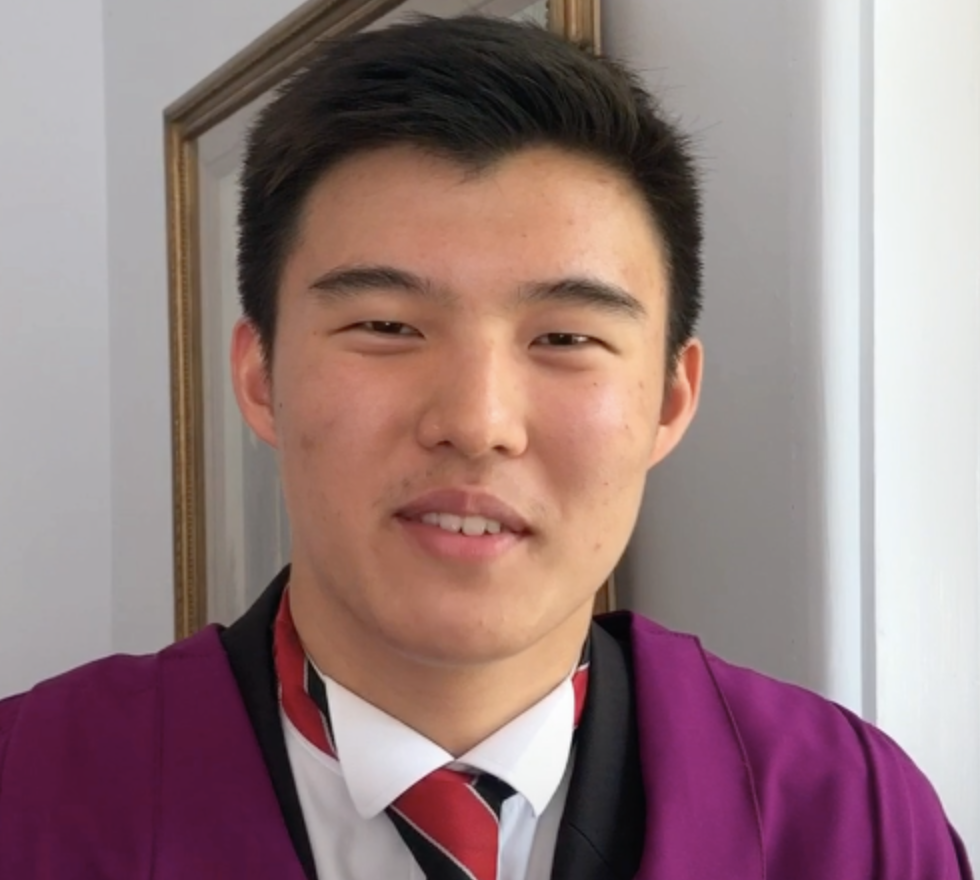
The stimulus to develop a student voice for partnerships came in the form of Daniel, appointed in 2019 as a school prefect with a partnerships brief to work alongside my team. With his inspiration, we set up three strands to facilitate student engagement with the King’s partnerships programme:
1. Partnership Leaders representing each house
2. Twinning houses with primary schools
3. Setting up a volunteering record for pupil to log their hours given to the community
Daniel is now in his first year studying law at university and we’ve been reflecting on how effective these initiatives were, albeit with the pandemic hitting halfway through the year. I’ll let him take up the story…
“My overarching focus throughout my time as prefect was maintaining a good balance between being ambitious and practical. These are not mutually exclusive concepts – we knew we had to be practical before we could be ambitious. I will explain how this played out in practice.
In July 2019, Christina and I had our first meeting to discuss our plans for the upcoming academic year. We had an idea to establish a volunteering record system, where pupils could log their volunteering work. This was mainly for two reasons. We wanted to recognise the efforts of individuals who were actively involved in volunteering activities and put a competitive spin to encourage involvement. This turned out to make volunteering much more community-oriented: houses set themselves goals, which created a positive and fun competition between communities within the school. In light of COVID-19, the online volunteering record system was a perfect way to see some of the more creative initiatives that pupils were volunteering, wherever they were in the world.
“We also had a goal of strengthening existing partnerships with the eight city-centre primary schools, designing activities that met the needs of each one of them whilst also providing skills development opportunities for pupils. At first this appeared to be an ambitious goal to be achieved in a year! There are only so many weeks to focus on volunteering before exams kick in towards summer. Thinking practically, I knew this goal could be achieved if we linked each day and boarding house with a primary school, and delegate the responsibility to Partnership Leaders in each house. Christina and I opened up the position of Partnership Leaders who would be a conduit for communication between the pupil body and Christina’s team, and would channel the enthusiasm for new volunteering and partnership activities. The group consisted of representatives from each house (predominantly Year 12 pupils) and we met fortnightly to discuss existing and new volunteering opportunities. This took pressure off teaching staff as pupils increasingly took the initiative. The Partnership Leaders were assigned a primary school to work with and they met with Headteachers in those schools to plan collaborations, from assisting with sports events and after-school clubs to putting up displays and re-organising the school library. Much of this was thwarted by lockdown, but some managed to continue to work together remotely.
“Although it may seem obvious, what works in a mixed school with 16 day and boarding houses may not necessarily work in, let’s say, a day school. In our approach, we optimized the fact that each house at the school was itself a very close-knit community with a friendly inter-house rivalry. In that sense, appointing Partnership Leaders to represent each house was the most sensible approach. That might not be the case in a day school, where a sense of community might be stronger in year groups, rather than in Houses. Also, as boarding school pupils were able to visit their twinned primary school before and after normal school hours, supporting breakfast and after-school clubs, we were able to be as flexible with our volunteering schedule throughout the school year. The early days of the twinning initiative were really promising and we hope that the relationships can be renewed post-lockdown.
“Suffice to say, the volunteering record saw pupil engagement with the community soar. The House pizza night prize was an initial motivator, but pupils continued to volunteer once they began to appreciate the wider skills and experiences they were gaining: helping to reorganise a primary school library, volunteering at sports day or a science masterclass, taking part in a community litter pick or leading a charity fund-raiser. The crucial thing was that we were building relationships with people in our local community – relationships that would last.”
Shifting responsibility to students requires careful thought and hard work. It brings challenges such as safeguarding concerns – but these can be assessed and addressed. Students have abundant initiative and creativity, and this responsibility can really unlock their leadership, communication and organisational skills, whilst enhancing community relations.
Many schools involve students in their partnership work, with inspiring examples ranging from charitable work to peer mentoring; but I’ve learned, with Daniel’s insightful input, that letting loose the power of the student voice can be transformational.
How can we help?
If you’d like to know more about facilitating student initiatives in your partnerships programme, please get in touch. Daniel and I can work with staff at your school to devise a bespoke solution that will work in your setting, including training for the student leaders involved.
Daniel Koo biography
Daniel is a first-year law student at the London School of Economics. At school, he served as School Monitor in charge of Volunteering & Partnerships, Captain of Swimming and Editor of The Grange House Magazine. In 2016, he founded the school’s Model United Nations society and hosted 3 conferences until leaving the school in 2020.
His role in Partnerships at school enabled him to view a situation from wider perspectives and work collaboratively with others to find creative solutions.