
This is an article based on a talk given at the WomenEd Global Unconference on Saturday 1st October 2022 by Christina Astin (Chair of Planet Possibility), Marilyn Comrie (Director of The Blair Project) and Olivia Keenan (SEPnet and QMUL).
Some young people, including girls, are put off studying physics because of misconceived stereotypes. Planet Possibility is a consortium working to change this, radically.
Read on to find out what we are doing and how education leaders can be part of the solution.
In this article we want to highlight the gender imbalance in physics, tell you what the Planet Possibility consortium and others are doing to address it and what education leaders can do to help.
What are the first three words that come to mind when you hear the word “physicist”?
Fig 1 shows a Google image search for “physicist”. Does it confirm or shatter your own opinion?
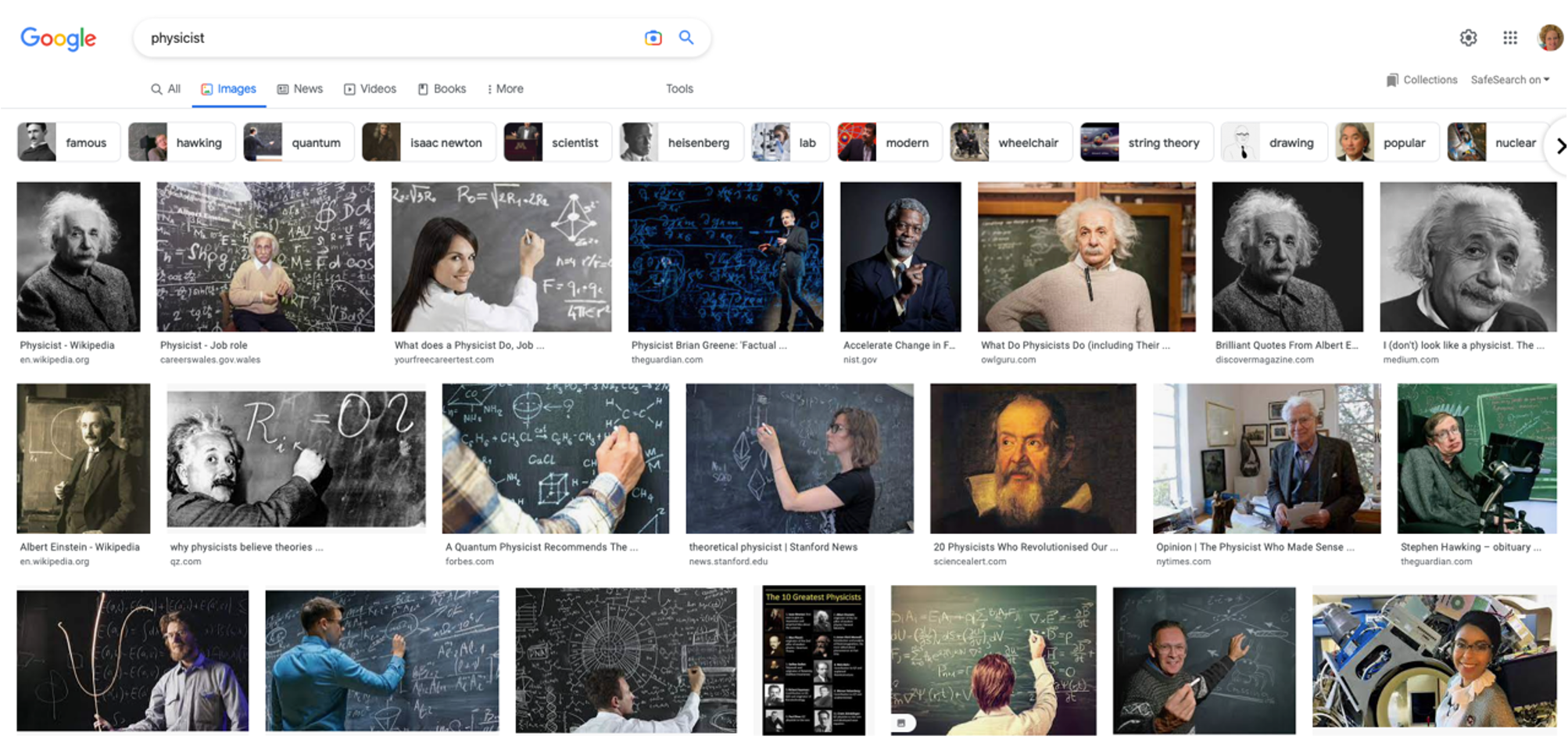
To those of us working in physics this group of images is pretty disappointing: it reinforces the image of physics as the preserve of dead white males. And a subject which still uses chalkboards!
Parents and carers were asked to describe someone who does physics, and Fig 2 shows a word cloud representing their responses.
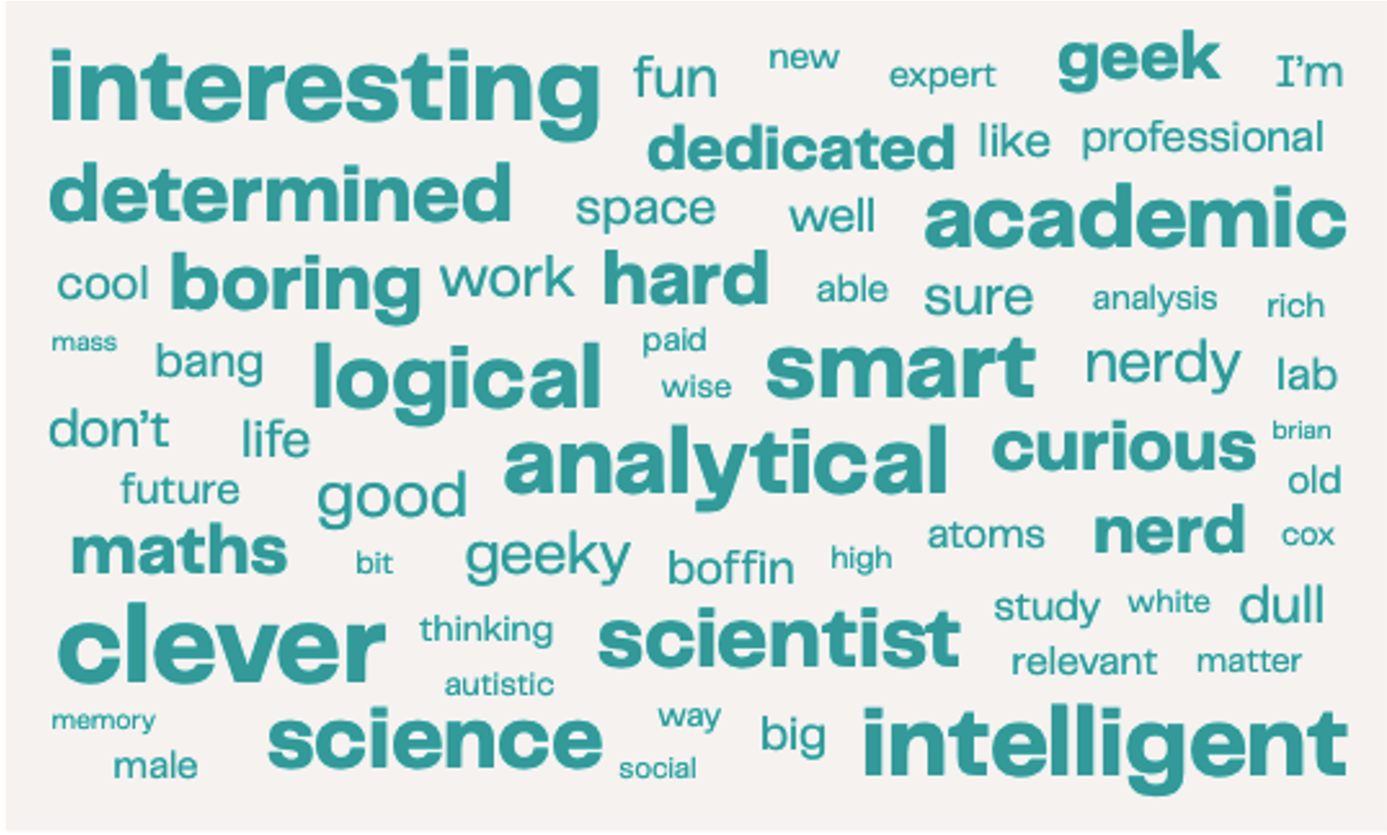
IOP Limitless 2020
What about gender imbalance in the classroom? The Aspires 2 project worked with children aged 10 to 18. The research found that girls often did not feel “clever enough” to do physics, even though girls achieve similar grades to boys, and felt that teachers had lower expectations of them and were less interested in how they performed.
We know that the proportion of girls studying A-level physics in the UK has been stubbornly low for over 20 years at around 20%. There are also inequalities in social background, ethnicity and disability. And this imbalance follows through into the world of work where women make up only 22% of the STEM (Science, Technology, Engineering and Maths) workforce.
Some might ask why this is a problem? To start with, the UK has a shortfall of STEM professionals – around 60,000 engineers per year are needed, for example. But it’s not just about UK plc. We need more physicists to meet global challenges: tackling climate heating, developing artificial intelligence, designing energy storage solutions. Teams solve problems better when they are more diverse. And anyway, we should ensure that this large proportion of the population are not put off physics for the wrong reasons: perhaps working in physics would bring them the fulfilment they are currently being denied.
Addressing this as part of the solution is Planet Possibility, a consortium made up of universities (Birmingham and Southampton), charities (Future First and The Blair Project) and a business (the All About Group). Together, these organisations boast vast experience in the areas of diversity, inclusion, engaging with young people, STEM, physics, careers and digital projects.
Together, the consortium will
- Provide a greater diversity of young people with access to physics specialists and role models – including traditionally under-represented groups, including girls;
- Provide greater support for physics teachers;
- Encourage and develop talent into academic & technical physics-based careers.
Through a digital platform, the consortium plans to extend its reach through events, webinars, content, games, guides, jobs, work experience, mentoring and other tools and channels to help create a flourishing physics community.
Planet Possibility is funded by the Institute of Physics’ Challenge Fund to help deliver their strategic aim of improving the diversity of people doing physics in education, research and industry.
One of the consortium partners, The Blair Project, works with young people of mainly BAME backgrounds, originally around Manchester. It was started by two brothers, Nile and Blair Henry who gave schoolchildren the opportunity to retrofit electric motors in go-karts – learning about green energy while tinkering!
Now, as part of the consortium, The Blair Project is offering a range of activities to engage this traditionally underrepresented group:
- BAME online Physics Clubs providing safe spaces for science and tech geeks of colour to engage with others like themselves, to feel less isolated, and overcome the peer pressure that physics isn’t cool.
- Interactive activities to bring physics to life through tinkering and hands-on learning, engaging TikTok physics videos, inspirational talks from role models of colour.
- A bi-monthly See Me Be Me podcast hosted by Nile and Blair Henry
- Industry visits to employers to broaden horizons and deepen understanding of the range of existing and emerging careers.
- Growing awareness amongst parents, carers and the wider public of the role of physics in solving global challenges.
Another partner, Southampton University, is part of a network of 9 university physics departments, SEPnet, working together to widen access to physics. Olivia Keenan from QMUL spoke about their work streams:
- Decolonising undergraduate curriculums across their university partners
- Assessing the BAME awarding gap across their partners
- Running gender and science identity programmes with schools
- Advising the exam board AQA of diversity in their Physics specifications
The third of these includes a school-based project called Shattering Stereotypes, involving multiple interventions for year 8 students. It raises awareness of gender stereotyping in young people and equips them with tools to deal with this and also offers supplementary teacher CPD to improve gender balance in classrooms.
So, how do we help to encourage girls to consider physics beyond age 16? Our call to action for school leaders was summarised thus, and benefits all learners, not just girls
1. Good quality teaching
Recruitment and training, focus on specialist physics teachers, encouragement of ‘tinkering’!
2. Whole school gender policy
Challenging unconscious bias in curriculum; ensuring appropriate and consistent language.
3. Access to role models
We can’t be what we can’t see – careers role models open up a world of possibility for young people.
A recording of the presentation is available on YouTube.