
This week I delivered a workshop on plastics and their eco-friendly alternatives to an entire primary school – VIA ZOOM!
As somebody once said “we don’t grow when things are easy; we grow when we face challenges”. But it doesn’t half help if there are others around to give you a hand!
I thought I’d mastered the art of delivering CPD via Zoom/Teams/Adobe/Google. I can use polls, virtual whiteboards, breakouts, chat and padlet. I have my gorgeous visualiser for small experiments and live modelling, and I’ve invested in decent lighting and audio.
But then I found myself leading a science workshop for 420 small children – virtually!
It should have been a face-to-face workshop for British Science Week, on the subject of “Innovating for the Future”, looking at the damage done to our planet by our use of plastics, and eco-friendly packaging alternatives such as starch packing chips and cellulose wrap. With funding from the Ogden Trust I researched the topic and developed a hands-on workshop with experiments, crafting activities and important environmental and careers messages.
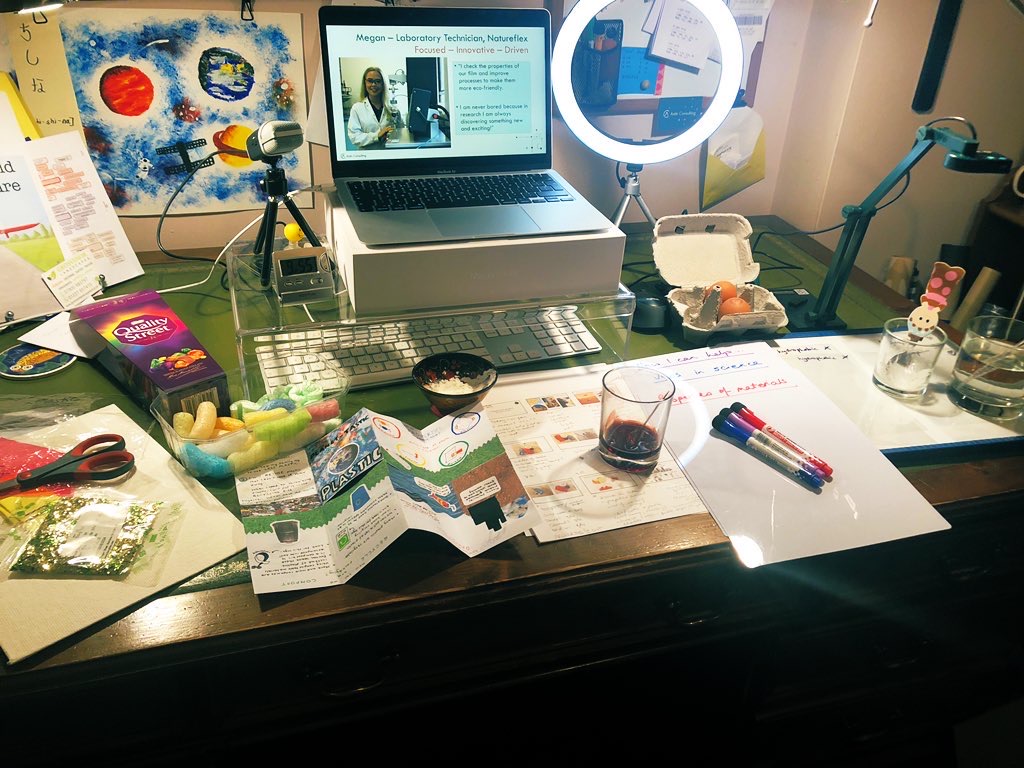
I enlisted some help from primary expert Carole Kenrick, who many will know as @HelpfulScience on Twitter. With her input I designed a workshop building in flexibility of timing and age-level. Activities include sorting plastic packaging and learning names of physical properties, dissolving starch chips in water, mixing cornflour and water, comparing hydrophilic and hydrophobic film. The workshop is ready to go and I’ll be delivering it to primary schools around East Kent, targeting those with a high degree of disadvantage.
But for this first school, visiting in person was not yet permitted – so we swerved online! Each class would log onto a Zoom call and I’d be able to see and hear them, all 6 Key Stage 1 classes and 9 Key Stage 2!
My challenges: How to interact with the children? Ask and answer questions? How to run the activities safely and effectively at a distance? How to know when it was time to move onto the next activity? How to make sure they key points were coming across?
Well, the staff at the school were fantastic – typing questions in the chat, unmuting so a child could come up to the camera to answer a question, introducing Jake in Year 5 who wanted to tell me that he had found a bird’s nest with plastic in it! Even a quick thumbs up meant I could see that everyone was listening, or we were ready to move on. They distributed all the materials I’d sent ahead to quarantine so that everything was ready for the children at their tables.
The feedback has been invaluable:
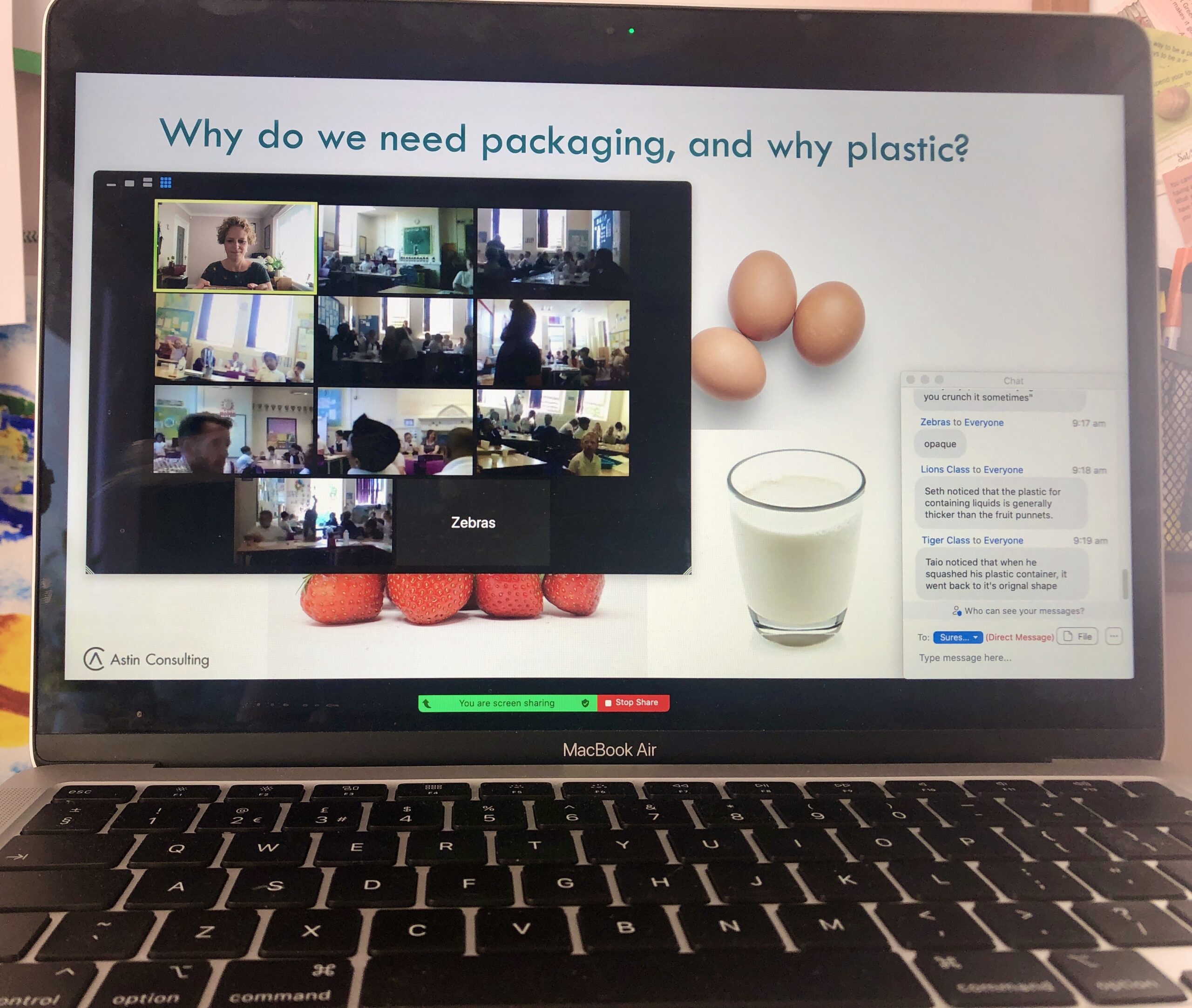
“I learned that we use so much plastic it could go round the Earth 4 times” and “cellulose is made from wood!”
Pupils pledged: “I will be recycling every day”, “telling my parents what I learned” (this is great – one aim was to encourage home-school engagement) “I will make sculptures out of plastic” and the classic “telling my brothers to put their wrappers in the bin”
Jobs pupils said they had learned about: “chemical engineer”, “inventor” and “recycling sorter”
When asked what they would like to learn more about, we had: “What will happen to the ocean if we don’t change what we are doing” and “No thank you. I’m good. I have learned enough for now” Little does s/he realise…!
The teachers seemed pleased (“brilliant workshop, especially considering it was on Zoom!”), though perhaps the pace was a bit demanding for Reception class, and I realised that a crib sheet would have helped them manage the practicals. Parents have also been given a summary of the workshop and some questions to ask their children, and asked for their feedback. All useful for improving future workshops, which I hope will be face-to-face.
Along the way I have met some fantastic people working at Natureflex in Cumbria, at the cutting edge of technology which actually pre-dates plastic: the making of cellulose from eucalyptus pulp. It makes a great oxygen barrier for food wrapping, can be coloured and, coated, is waterproof too. It can even be layered with 30 nanometre-thick metal and chopped into teeny hexagons to make biodegradable BioGlitter – and yet is compostable (hence the child’s pledge to eat more Quality Street quoted in the title!). I also made contact with a wonderful team at Greenlight in Wales who are making packing chips from cornflour – you know the ones, that look a bit like Wotsits? Well, they are pretty much the same thing! These kind people have shared photos and information about themselves to create a careers role model profile to inspire the children – some have even agreed to do a follow-up Q&A call with the classes.
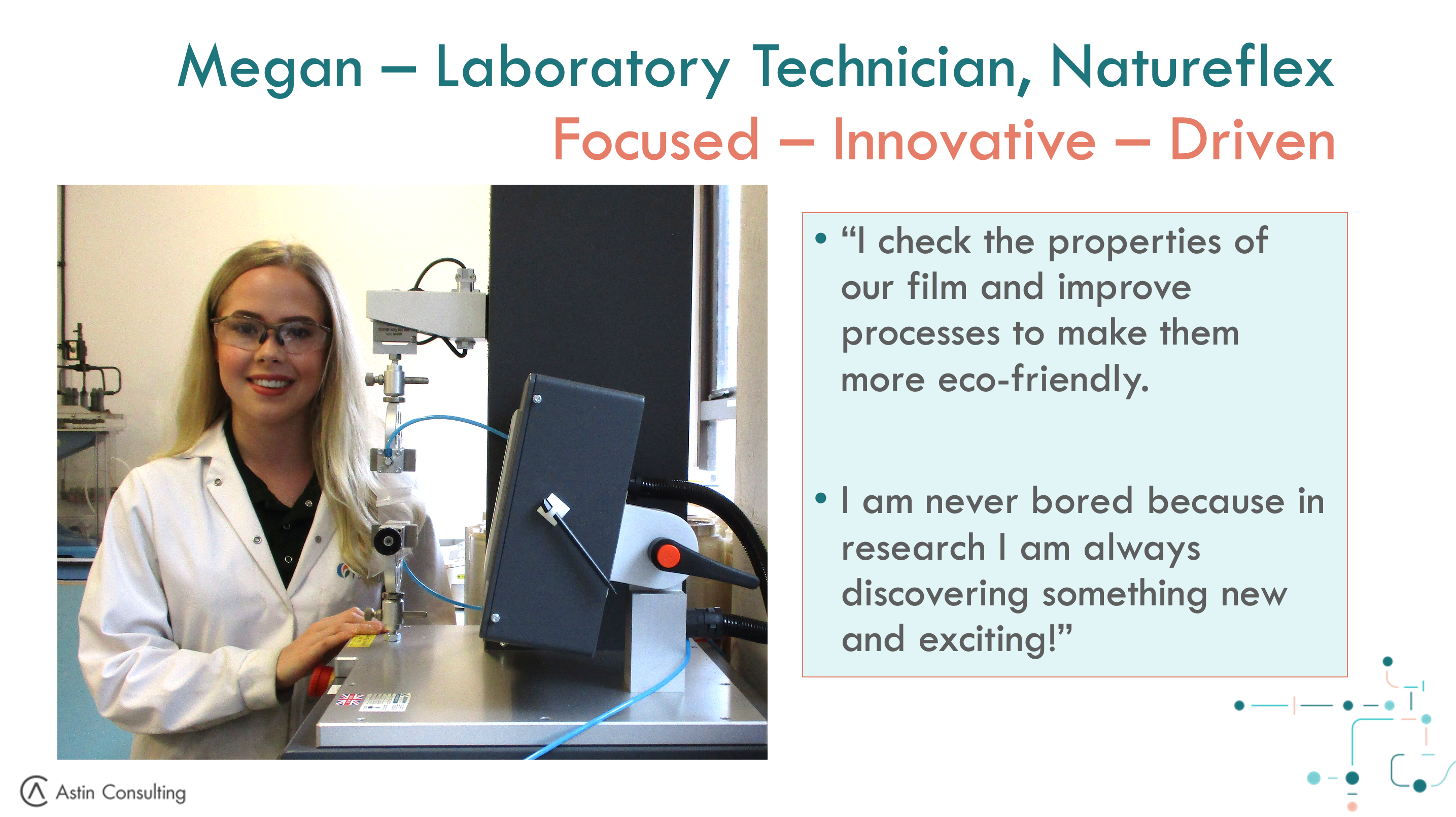
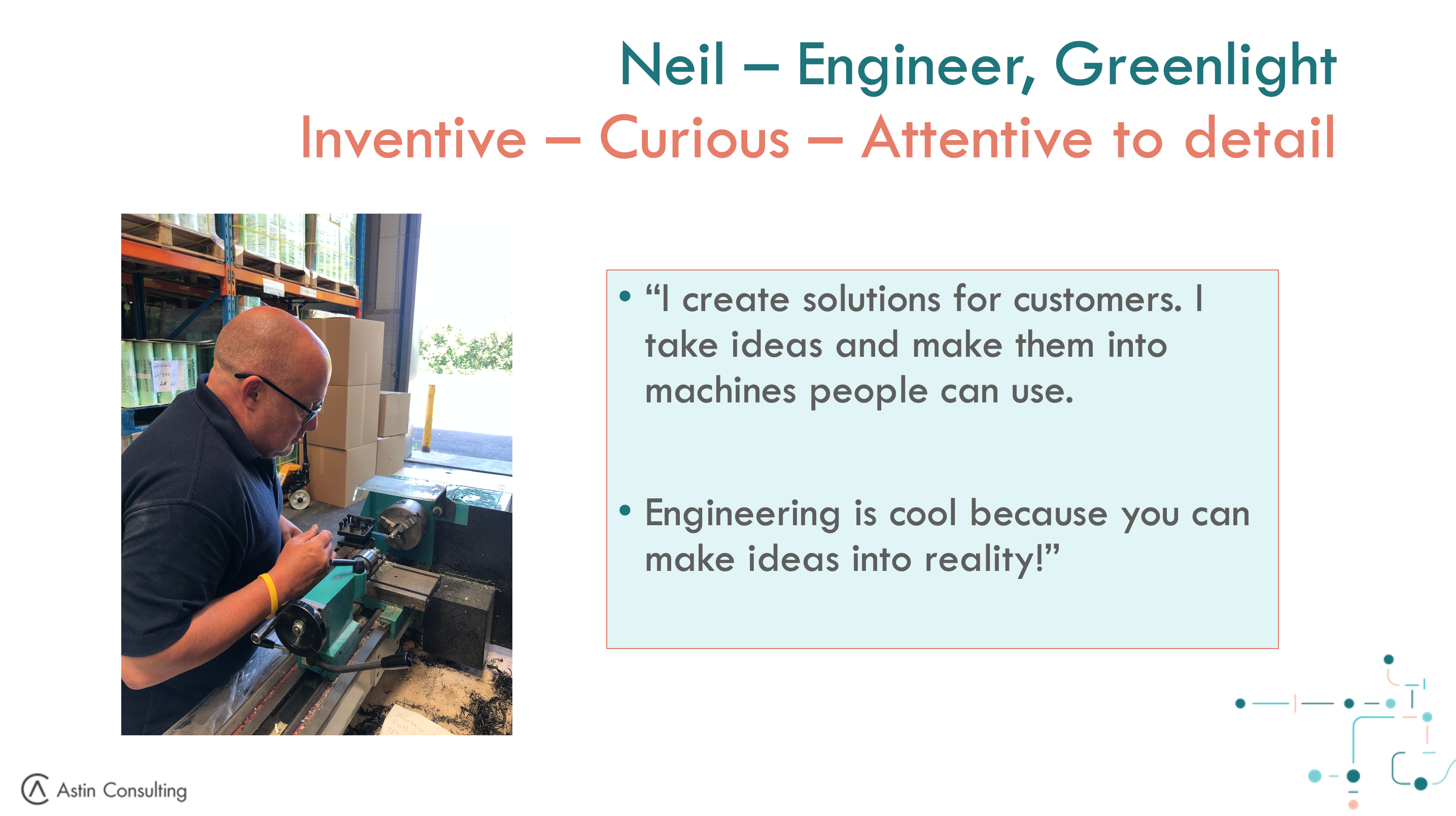
The experience took me right out of my comfort zone. But the help I got from the teachers at the school, colleagues and new friends in industry saved me from the panic zone. I really hope that we can get back to in-person events soon, but at least I know it’s possible to do some meaningful science virtually, which means that distance is no object!
Schools can register for a workshop here.
If you’re working in industry/research developing alternatives to plastics or recycling techniques (or wind power, my next workshop!) and would like to be featured as a careers role model, please click here.