As all parents know, we put on a brave face in order to instil a cheery confidence in our offspring. As my eldest and her friends prepare for GCSEs this year I’m acutely aware of the difficulties of studying for exams that didn’t happen in 2020 and still might not in 2021. Revising for mocks whose purpose is unknown – a useful practice run or evidence towards a centre-assessed grade? – is pretty unsettling. Add to that the fog surrounding some of the work which was supposed to have been covered during home-learning – and you have to sympathise with any child facing GCSEs this year.
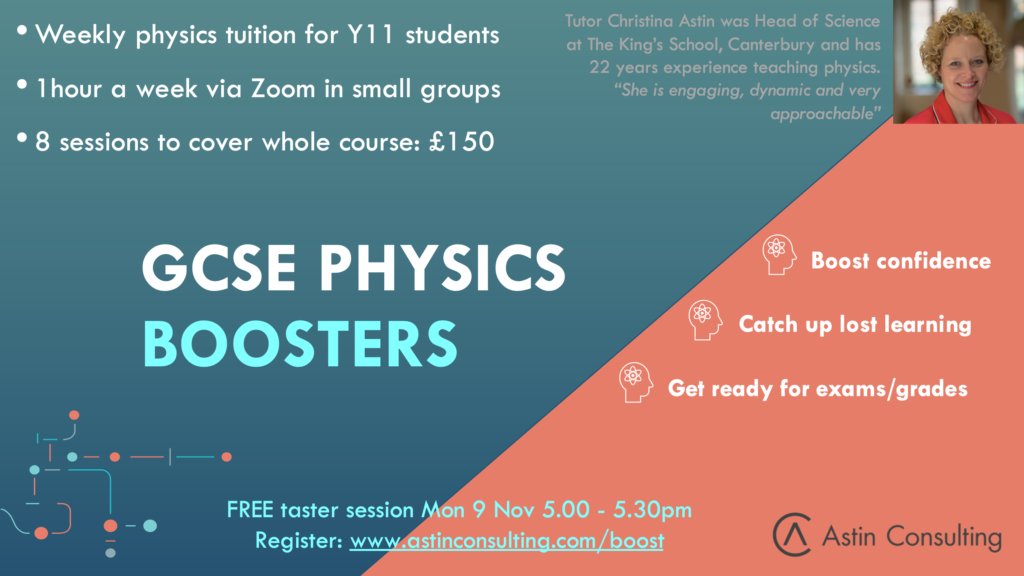
My subject, physics, is not an easy one to teach yourself from a textbook. The wealth of online resources, videos and simulations certainly helps, but nothing quite replaces expert instruction, especially with concepts such as momentum, latent heat or resistor networks. A good physics teacher has oodles of real-world examples and models to draw on, but it’s hard to communicate those if setting work remotely. Schools are looking at many different ways of catching up and filling the gap from the summer term (and I’m offering a virtual course too).
It’s even harder if your science specialism is not physics. I’ve had the pleasure of training hundreds of such teachers over the last few years – and the demand recently has been huge since the training has moved online and thus become so much more accessible to busy practising teachers. It’s humbling to be working with people who have taught classes all day but still log on to CPD after school for a confidence boost in a subject with which they feel less familiar.
As I transition from part-time employment to full-time freelance consulting I’m building up my own confidence to shape up my offer for future clients. It’s taking time, research and a bit of bravery to pursue the areas I really want to work in. As the quote goes, “it’s easy to start something new; harder stop something old”. But I’m learning a lot from my 16-year-old and drawing inspiration from the teachers I support.