
In July 2026, I hosted the final #PartnerChat Breakfast Briefing — the last of 42 monthly networking meetings for people leading school partnerships.
Looking back at the extraordinary range of topics, contributors and conversations we shared, I’m struck by just how much learning this community generated together. It was a real labour of love — but, more importantly, it was a collective effort.
So, whether you joined us regularly, dropped in occasionally or contributed to one of our conversations, I’d love you to look back with me.
The numbers
42 Breakfast Briefings
44 guest experts
400+ attendees
300+ schools and organisations represented
2 Symposia
And the prize for our most loyal attendees goes to...
Margaret Hunnaball and Rob Southwell-Sander!
Thank you to everyone who joined us, contributed, challenged ideas and generously shared their experience. A community like this exists for - and because of - its members.
What did we learn together?
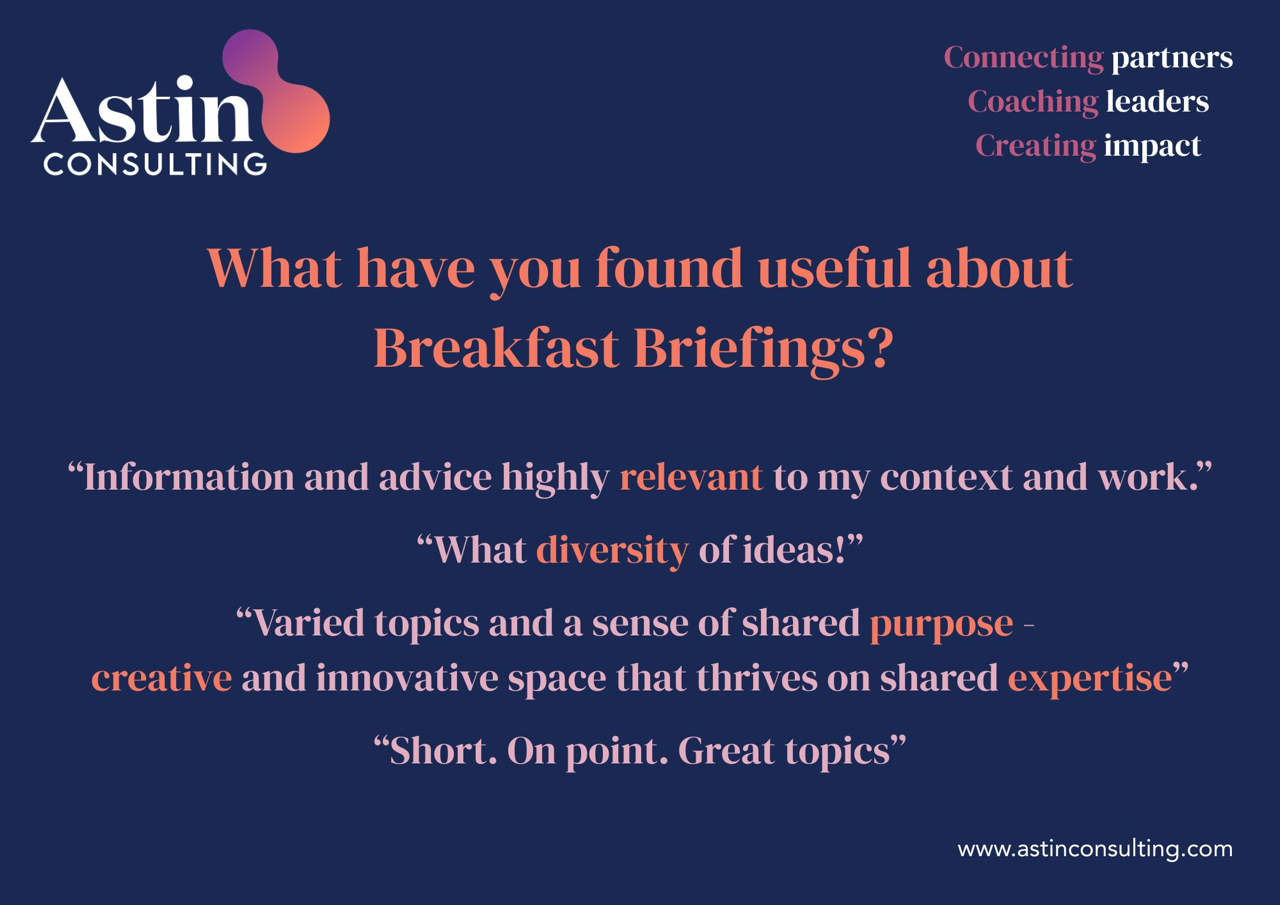
Every month, we came together to share ideas and learn more about how partnerships between schools can work better.
Looking back over five years of Wednesday morning conversations, three things stand out for me.
1. We need to talk
One of the things we all missed during Covid was the opportunity simply to come together: to chat, compare notes, share what we were doing and learn from one another.
There was already a strong appetite for this kind of connection. The Schools Together Group had held termly in-person meetings and, in the period before the Group developed into the School Partnerships Alliance, there was a palpable need for colleagues to get together and talk.
For many people leading partnerships, the Breakfast Briefings provided something particularly valuable: a community of peers. Often, partnership leaders are the only person in their school with that specific responsibility.
Professional co-learning is more than a nice-to-have. It’s essential.
And that conversation isn’t ending here. It is evolving...
2. There is an extraordinary amount of partnership work going on
The diversity, ingenuity and ambition of the work we heard about was remarkable.
Partnerships ranged across - and beyond - the UK. We explored everything from sport to science, careers to wellbeing, online research projects to residential summer camps.
The people involved were equally diverse: young children and grandparents, university professors and teenagers with special educational needs, Headteachers and ECTs, colleagues from large academy trusts and small rural schools.
One of the great joys of the Breakfast Briefings was discovering projects that made us think: Could that work for us?
The learning continues through our Leading Partnerships CPD programme, which is about to launch its fourth cohort this autumn.
3. There is no single way to lead partnerships
The diversity of approaches, leadership models and reasons for partnering is astounding.
For some schools, partnerships are about anchoring themselves in their local community. For others, they are part of a strategy for school improvement.
In some schools, partnerships are led by the Headteacher; in others, by a passionate teacher or dedicated partnerships lead. Some schools coordinate their partnership activity strategically across the organisation, while others allow colleagues to develop individual links organically.
There is no single blueprint.
Meeting colleagues in this way over five years has reinforced my strong belief that the best outcomes emerge from partnerships built on mutual benefit.
And perhaps the more diverse the partnership, the more there is to learn.
The Breakfast Briefing community itself was no exception.
What I’ll take away
For me personally, the camaraderie of this community has been immense.
I’ve learned so much from our contributors and from the conversations that followed their presentations. The Partnerships WorkBook, which I wrote in 2023, drew on many of the examples and ideas generously shared through the Breakfast Briefings.
What began as a response to a particular moment — when colleagues needed somewhere to connect, particularly after Covid — became a professional learning community in its own right.
And I’m enormously grateful to everyone who helped make it what it became.
The Breakfast Briefings archive
The wealth of learning from each session was captured in written notes, initially shared with attendees and later made available online.
The notes from the final 18 Briefings are still available. Email me if you’d like a copy.
And below is the record of the conversations we shared together.
One chapter closes. Another begins.
The Breakfast Briefings may be over, but the conversations certainly aren’t.
This term, I’m excited to launch LEADING Questions — a new series of conversations with people who lead.
Each guest is asked the same five questions about leadership.
The questions stay the same; the answers are wonderfully different!
We’ll be exploring leadership both within and beyond education, hearing how different people think, make decisions, communicate, respond to challenges and lead others.
And this time, there is no need to set your alarm for 8am on a Wednesday!
You’ll be able to watch, listen or read each conversation whenever it suits you.
Follow me on LinkedIn or Instagram, or keep an eye on this blog for each new release.
I'm confident that some of the same spirit of curiosity, generosity and shared learning that made the Breakfast Briefings so special will live on in Leading Questions.
I hope you’ll join me for the next conversation.
Five years of conversations
Take a look at the remarkable range of people, organisations and topics we covered in our monthly get-togethers.
| Date | Topic | Guest Contributor(s) |
|---|---|---|
| Jan 2022 | Impact Evaluation | Joe McGinn, ImpactEd |
| Feb 2022 | Science Partnerships | Chris Hillidge (TCAT) and Jeremy Thomas (Abingdon School) |
| March 2022 | Getting Started – Tips for New Projects | Gordon Montgomery (Oundle) and Graeme Lawrie (ACS) |
| May 2022 | Student Leadership | Christina Astin |
| June 2022 | Multi-School or Regional Partnerships | Alice Simmonds (United Learning) |
| Sept 2022 | Strategy and Planning | Jon Boyes (Herne Bay High School) and Dr Margaret Hunnaball (SPA) |
| Oct 2022 | Academic Tutoring | Tim Dalton (Lumina) and Bernadette Alexander (Barnet, Brent, Ealing and Harrow Virtual Schools) |
| Dec 2022 | Partnerships for School Improvement | Chris Wheeler (Monkton Combe School) |
| Jan 2023 | Peer Mentoring Across Schools | Rob Southwell-Sander (Abingdon) and Henry Faber (Oppidan Education) |
| Feb 2023 | Measuring Partnership Impact | Ciara Sims (ImpactEd) and John Smith (RGS Newcastle) |
| March 2023 | MATs, Federations and Partnerships | Jack Mayhew (Learning Partners Academy Trust) and Katy Ricks (King Edward’s School, Birmingham) |
| May 2023 | Music Partnerships | Simon Toyne (David Ross Education Trust), Sam Gladstone (Radley College) and Julie Evans (King’s Canterbury) |
| June 2023 | Practicalities, Policies and Partnerships | Christina Astin |
| July 2023 | ‘Partner Voice’ – Ensuring All Parties in a Cross-Sector Partnership Have a Voice | Dr Margaret Hunnaball (SPA) |
| Sept 2023 | Back to School! | Oliver Blond (SPA) |
| Oct 2023 | Being Strategic about STEM Partnerships | Christina Astin |
| Nov 2023 | Partnerships that Support SEND | Christina Astin |
| Dec 2023 | Can Cross-Sector Partnerships Make a Difference to Schools? | Dame Alison Peacock (Chartered College of Teaching) |
| Jan 2024 | Partnerships Between Secondary Schools | Iain Holmes and Gordon Montgomery (OPEN Learning Partnership) |
| Feb 2024 | Primary/Prep Partnerships | Nina Adamson (St Edward’s Middle School) and Jane Davies (Boyne Hill CofE Infant School) |
| March 2024 | Language Partnerships – How Can Schools Collaborate to Support Languages Learning? | Melissa Agnew (Avenue Junior School), Richard Turner (Magdalen Gates Primary) and Abigail Dean (Norwich School) |
| May 2024 | Funding for Partnerships | Louise Bennett (Institute of Development Professionals in Education) |
| June 2024 | Cross-Sector Student Exchanges | Heidi Heinemann (Roots Programme), Sarah Atkin (Leeds East Academy) and Caroline Dunn (Cheadle Hulme School) |
| July 2024 | Leadership and School Transformation | Chris Wheeler (Monkton Combe School + Challenge Partners) and Sarah Seleznyov (Big Education + Next Big Ten) |
| Sept 2024 | Post-Summer Catch-Up | Community discussion |
| Oct 2024 | Sports Partnerships | Various! |
| Nov 2024 | Impact Evaluation Top Tips | Christina Astin |
| Dec 2024 | Working with FE/HE Partners | Chris Hillidge (TCAT) |
| Feb 2025 | Supporting Partnership Leaders | Christina Astin |
| March 2025 | A Pyramid of Impact? | Josh Plotkin, Haberdashers Schools |
| May 2025 | Internal Communications | James Clark, Newcastle School for Boys |
| June 2025 | External Communications | Rachel Kerr (AMCIS) |
| Sept 2025 | Partnerships for Equity, Diversion and Inclusion | Johan Jensen (All-in Education) |
| Oct 2025 | Engaging with Families | Joe Shimwell (NUSTEM) |
| Dec 2025 | Partnerships for Business and Enterprise Studies | Nick Troen, Paul Anderson and others (West London Partnership) |
| Jan 2026 | Leading Partnerships: Current Challenges | Christina Astin |
| Feb 2026 | Partnerships and the Curriculum and Assessment Review | Jenna Crittenden (Chartered College of Teaching) |
| March 2026 | Fireside Chat with Joe Spence | Joe Spence (SPA) |
| May 2026 | Sports Partnerships | Dr Margaret Hunnaball (SPA) |
| June 2026 | “Am I Normal?” – Partnerships in RSHE | Jess Hawley (The RAP Foundation) |
| July 2026 | Partnerships and Inspection | Chris Hillidge (TCAT) and Josh Plotkin (Habs) |
Thank you again to everyone who was part of the Breakfast Briefings.
It was a privilege to share those Wednesday mornings with you.
Now — on to Leading Questions...!