
I expect that most women reading this will be familiar with most men commenting on their appearance – sometimes a well-meant compliment, sometimes shouts from scaffolding. It’s a fact of life as a woman.
This comment “You don’t look like a physics teacher” was the opening line from the father of a year 10 girl at parents’ evening.
Initially I was faintly amused – haha, yes, no leather elbow patches or slightly crazed Einstein look (though I do have the curly hair, hoho…).
And then came the gradual realisation of the effect of that comment - not so much on me, but on his 15-year-old daughter. Physics is not for girls. Or at least, not for women that look like me, or perhaps like her. Another ripple in the tsunami of messaging that puts girls off studying physics beyond GCSE.
That was some years ago when I was head of physics at a co-ed secondary school, working hard to make physics more appealing for girls and making a mess with a few smashed glass ceilings on the way. Trying to be #10% braver.
Now, I find myself championing EDI (equity, diversity and inclusion), especially for young people. It’s not the main thrust of my work – that’s building education partnerships – but it’s woven through everything I do. Many of the partnerships I help to develop are designed, explicitly or otherwise, to widen opportunities for young people, regardless of their economic status, gender, ethnicity or other factor. Partnerships between the corporate or charitable worlds and schools can provide experiences that help to overcome the no entry signs we find everywhere. To me, it’s a no-brainer, but that doesn’t mean it’s not hard work.
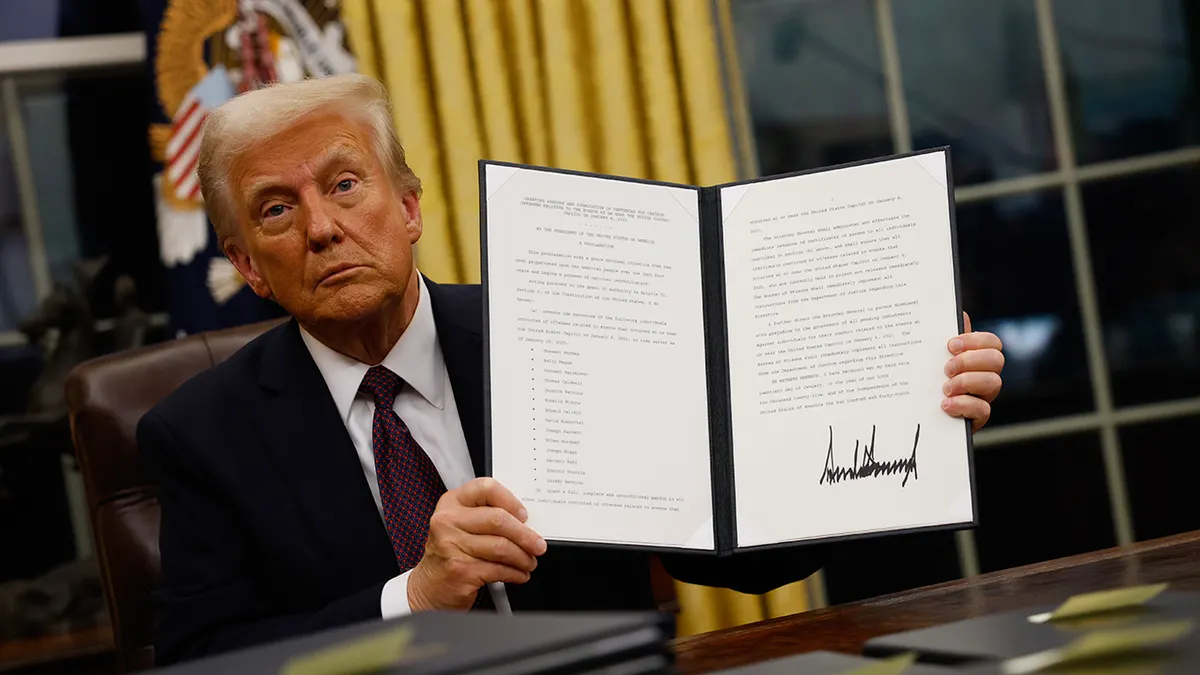
It was an honour to chair Planet Possibility, a consortium working together to celebrate and promote opportunities for young people in physics and build a diverse community of future physicists. DEI (as it’s known in the US) is being treated with disdain by Trump, Musk and their regime, with summary dismissals of those suspected of being ‘DEI hires’ rather than appointed on merit. I wonder how long it will be before his administration casts doubt on female physicists?
Well, if I don’t look like a physics teacher, Trump certainly doesn’t look like a president.
A friend asked me last week if the girls and physics thing was still a problem. Sadly, I had to tell her that the proportion of girls taking physics at A level (about 23%), university or via an apprenticeship has hardly changed in 30 years.
I’ve written a fair bit about some of the recent research and projects that are beginning to make a difference to the gender balance (see links below*). Recent conversations and reading have further shaped my thinking on this, which I’d like to share…
TEACHING
I’ve been working with Physics Partners, a charity which supports physics teachers, especially those teaching outside their specialism (the majority). We’ve been creating resources for colleagues to use in their coaching sessions with teachers which consciously embed EDI thinking and messaging into all that we do. The Inclusive Teaching tips provided by the Institute of Physics are also excellent.
At the ‘chalk face’ teachers can make a huge difference in the messages they convey:
- Yes, you can do this, and I’ll support you (even if you’re the only girl in the A level class).
- No, physics is not just for white male boffins.
- Yes, there are lots of different jobs that physics can open up for you, even without a physics degree.
CURRICULUM
Recently I’ve been looking at this from a slightly different angle, having read a brilliant paper from September 2024 looking at the effect of the physics curriculum and assessment on girls.
The authors, Helen Gourlay and Tamjid Mujtaba, ask searching questions:
- Is anyone looking at the gender bias in assessment schemes?
- Or the relative difficulty of different A level subjects?
- Who writes the curriculum?
- Are they representative of the diversity that exists amongst students or teachers?
Jim Al Khalili wrote a superb article on the importance of a curriculum that promotes thinking over learning facts. It chimes with the heart-breaking disengagement I see amongst students and their teachers with a science curriculum which is over-stuffed full of facts, providing scant time to digest concepts and appreciate the beauty of science or the joy of learning.
The early messages coming from Professor Becky Francis’s review of the curriculum are promising.
GIRLS AND PHYSICS IN OTHER COUNTRIES
Many of us in the UK are surprised to learn that the gender imbalance we see in the UK is not reflected worldwide… In many countries, especially those that are Muslim-majority, women outnumber men in physics, at least until you get to a senior level.
This fascinating study outlines some interesting underlying reasons:
1. gender-segregated classes helps girls to feel less out of place (a view the Girls’ School Association would undoubtedly endorse, as would this alumna of a girls’ grammar)
2. learning is strongly valued and academic expectations are high
3. physics is seen as a subject which makes a difference to people’s lives (not just for ‘boffins’, as highlighted by the Institute of Physics’ media-grabbing ‘Bin the Boffin’ campaign of 2023).
EVERYONE CAN ‘LOOK LIKE A PHYSICIST’
So, synthesising all of the above, how can we help everyone can feel that physics is for them?
Well, I’d start with a new curriculum which embraces diversity in its scope and assessment. A curriculum which demonstrates the power of physics to enhance people’s lives and address the planet’s biggest problems. A curriculum which brings back the joy and wonder of physics, fit for the AI-powered 21st century, focused on thinking and exploring, not learning facts.
Then we have to break the vicious circle which has led to the chronic dearth of physics-specialist science teachers. The new curriculum would encourage more to study physics beyond GCSE, resulting eventually in more physics graduates. Radical improvements in the terms and conditions for teachers are then needed, to attract physicists, especially, away from other more lucrative, flexible jobs. Mark Whalley and Ian Horsewell's research is well worth a read.
The result? In the short term, happier students and teachers enjoying engaging, relevant, inclusive physics lessons. Later, we’d see adults reflecting on their childhood physics lessons warmly and encouraging their children in the subject, whatever they look like.
And, in the long term… a larger, more diverse cadre of physicists, the better to battle the ‘disinformation space’ and solve the world’s crises.
What do you think? Get in touch with your thoughts, to book me to work with your science team, or if you’d be interested in hearing more about our next New to Science Leadership course.
*LINKS
This on Planet Possibility, the consortium which I chaired, and my 5 suggestions for how to address the lack of diversity in physics:
This post which highlights the work of Planet Possibility via a short film.
And this post which points to a STEM role model resource called “People Like Us” which I was involved in developing.
Thanks for reading!